
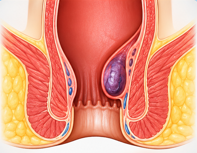
Internal
Hemorrhoids
Swollen veins inside the rectum.
Hemorrhoids, also called piles, are swollen veins in and around the lower rectum and anus. They can cause discomfort, itching, bleeding and other symptoms. Treatment depends on the type and severity of the condition.
Swollen veins inside the rectum.
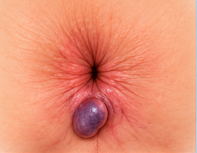
Swollen veins around the anus.
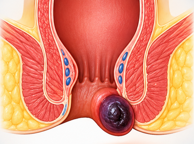
A blood clot forms in an external hemorrhoid.
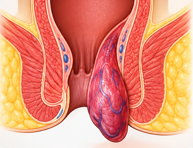
Internal hemorrhoids that protrude outside the anus.
Chronic
constipation
Chronic
diarrhea
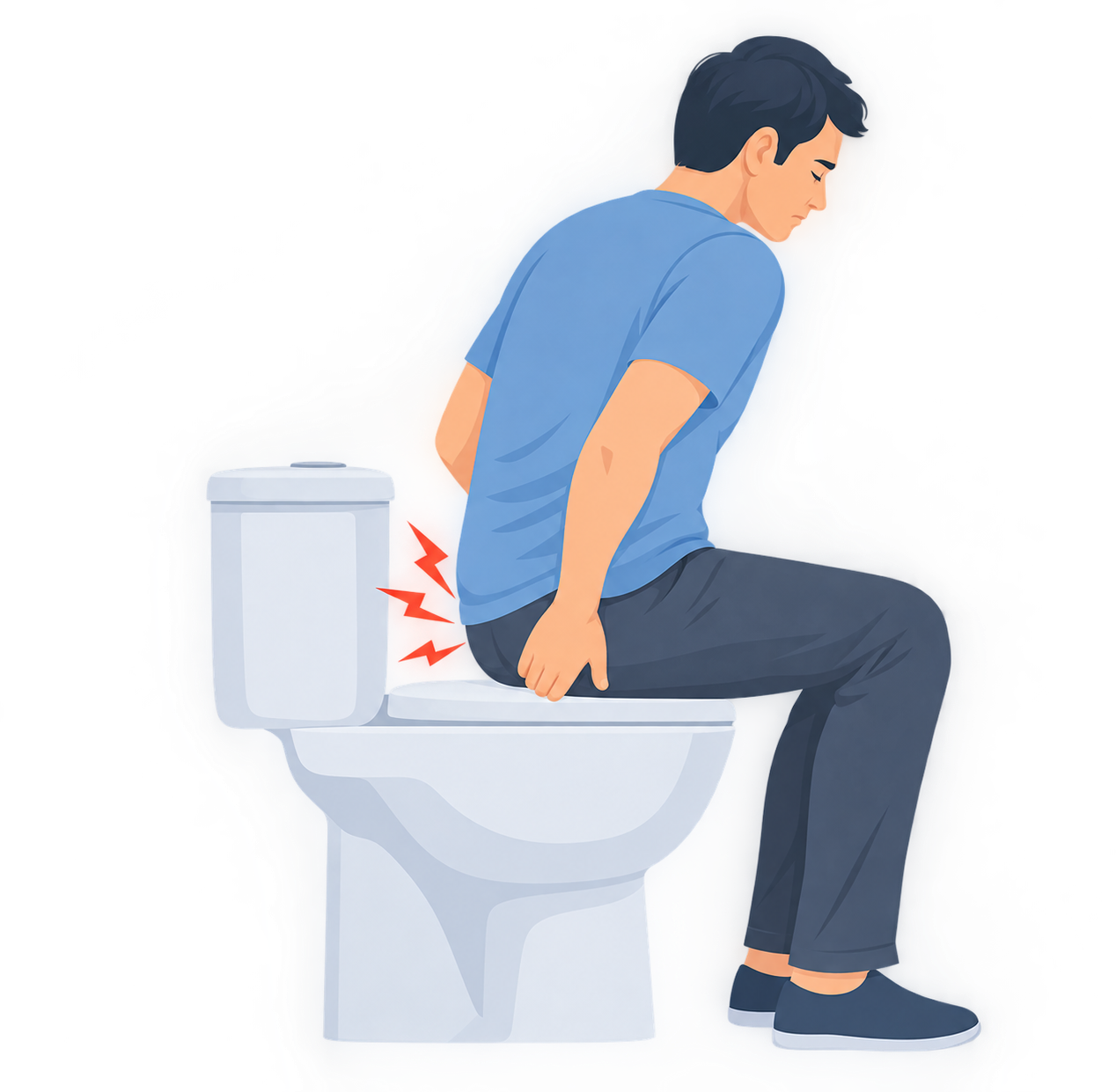
Straining while
passing stools
Prolonged
sitting
Low fibre diet
and junk food
Drinking
less water
Dehydration
Obesity
Aging
Heavy lifting
Itching or irritation in the anal area
Severe pain
Pain or discomfort near the anus
Swelling
Swelling around the anus
Inflammation (redness)
Bleeding per rectum (blood in stool)
Piles are classified into four grades based on the severity and prolapse of the hemorrhoids.
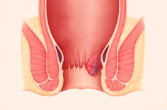
There is slight swelling but no prolapse.
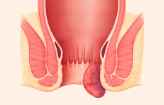
Prolapse occurs while passing stools but retracts automatically.
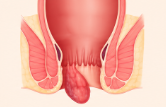
Prolapse that requires manual pushing back into the anus.
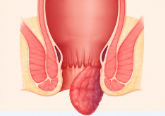
Permanently prolapsed and cannot be pushed back in.
Your surgeon will evaluate your symptoms and may suggest:
Detailed discussion about your symptoms, diet and lifestyle.
A gentle examination to feel for any abnormality.
A scope may be used to examine the anal canal.
Recommended in selected cases to assess the large intestine.
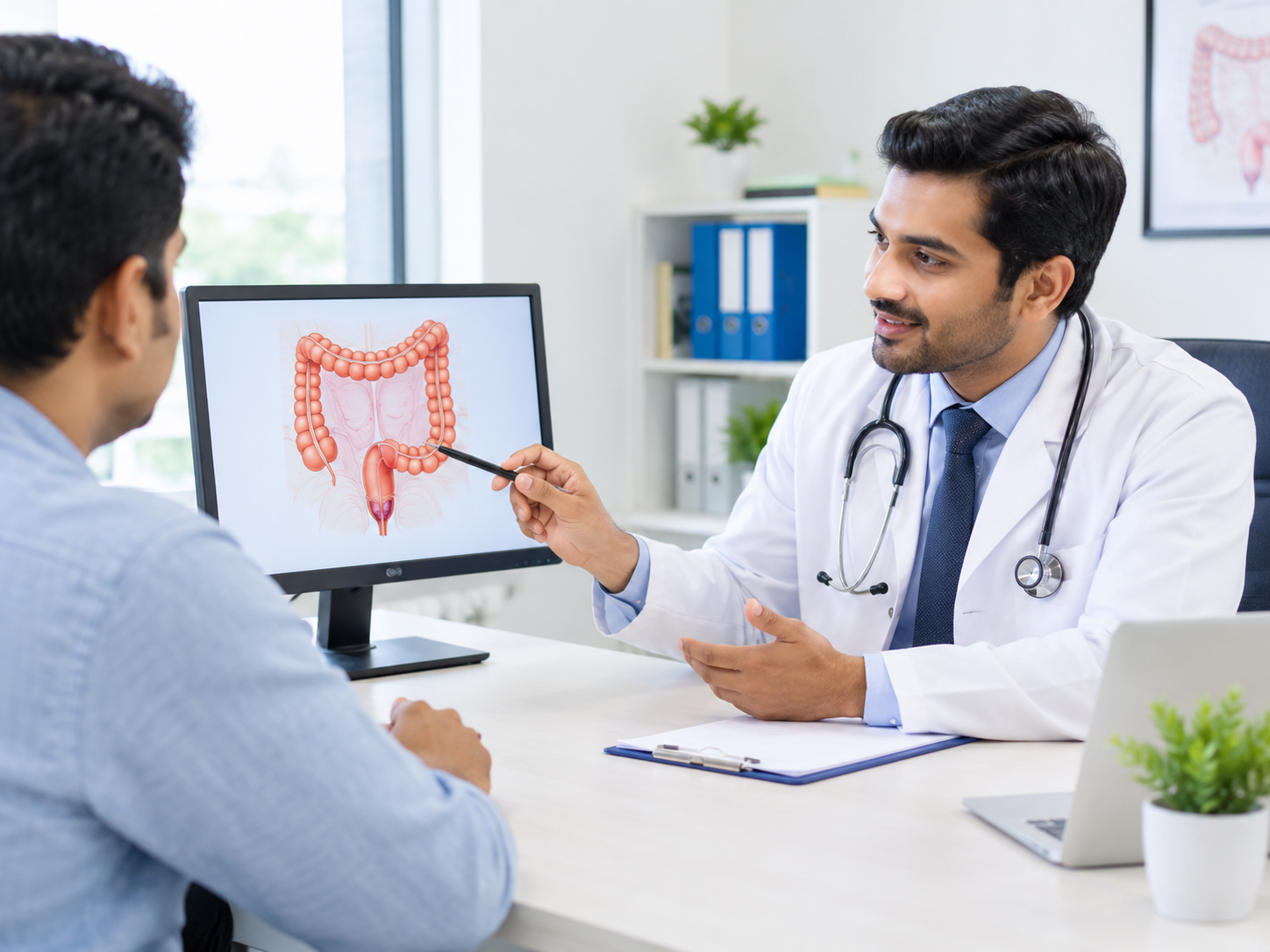
The right treatment depends on the type and grade of piles, your symptoms and your overall health. Our specialist will recommend the most suitable option for you.

High-fibre foods, adequate water intake and healthy bowel habits may help relieve symptoms.
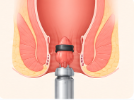
A small elastic band is placed around selected internal hemorrhoids to reduce their blood supply.
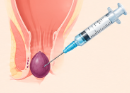
A special solution is injected into hemorrhoid tissue to help it shrink.
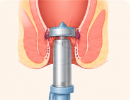
A stapling procedure may reposition prolapsed internal hemorrhoids in selected patients.
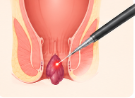
Surgical removal may be recommended for selected cases, depending on the type and severity of hemorrhoids.
Get expert advice from our specialist and find the right treatment option for your condition.